Table of contents
Between hybrid work, late-night screens, and the constant low hum of city stress, many urban professionals are looking for routines that do more than “feel nice” for five minutes, and facial massage is increasingly being treated as a serious, time-efficient reset. Once tucked away in luxury spas or backstage beauty prep, it has moved into bathrooms, gyms, and even office-adjacent wellness studios, pushed by social platforms and pulled by a broader shift toward preventive self-care. But what, exactly, is changing, and what does evidence suggest facial massage can realistically deliver?
From spa treat to daily tool
Is it just another wellness fad? That is the question many dermatologists and physiotherapists hear when facial massage shows up in morning routines alongside SPF and caffeine, yet the speed of adoption is not accidental, and it tracks with how city life compresses time. In dense urban schedules, people favor practices that are simple, portable, and layered with multiple benefits, and facial massage fits that profile because it can be done in five to ten minutes, requires minimal equipment, and can be combined with existing skincare.
The market signals are hard to ignore. The global face massage tools market was valued at about USD 610 million in 2023, and is projected to reach roughly USD 925 million by 2030, according to Data Bridge Market Research, a rise that mirrors the broader at-home beauty device boom. Meanwhile, “lymphatic drainage” and “gua sha” remain persistent search terms on Google Trends across major cities, spiking around holiday periods and, tellingly, during winter months when stress, travel, and indoor heating peak. Beauty retailers have responded by moving tools and massage-friendly oils into mainstream aisles, and urban studios have added quick “express” facial protocols designed for lunch breaks rather than half-day escapes.
This shift is also cultural. Facial massage is not new, and techniques appear across traditions from East Asian gua sha and Japanese-inspired facial kneading to European manual facial therapies. What has changed is packaging, tempo, and the promise of control. When commutes are unpredictable and calendars are tight, the appeal of something you can do at home, without an appointment, and still feel a tangible difference, even if temporary, becomes powerful. For many, the immediate hook is the post-massage look, less puffiness, more “awake” features, but the sticking point is how it feels: a brief ritual that marks a boundary between work mode and personal time.
The science: what holds up
Miracle cure, or modest help? The truth sits in the middle, and it becomes clearer when you separate skin biology from social-media claims. Several small studies suggest facial massage may influence blood flow and perceived skin appearance, and while the evidence base is not as deep as for sun protection or retinoids, it is not empty either. A study published in PLOS One (2018) examined a facial massage device and reported improvements in facial sagging and skin appearance measures over time, though the sample sizes typical in this field mean results should be read cautiously and not generalized beyond the study conditions.
Mechanistically, massage can increase local circulation and generate mild mechanical stimulation of the skin and underlying tissues, which may temporarily enhance radiance and reduce the look of swelling. Lymphatic flow, often invoked online, is more complex than a few strokes, but gentle manual techniques can support fluid movement, particularly around areas prone to morning puffiness such as under the eyes and along the jaw. Stress is another axis. Massage in general has been associated in broader research with relaxation and reductions in perceived stress, and while facial massage is a more localized practice, it still engages the parasympathetic “downshift” many people are chasing after hours of tension, jaw clenching, and screen focus.
Still, limits matter. Facial massage does not replace medical treatment for inflammatory skin conditions, and it is not a substitute for evidence-based anti-aging measures such as daily sunscreen. Overly aggressive techniques can irritate the skin barrier, worsen rosacea, or trigger breakouts in acne-prone skin, especially when performed with heavy oils or unclean tools. The most defensible claims are incremental: temporary de-puffing, subjective relaxation, short-term glow, and potentially improved comfort in facial muscles that carry tension. If a routine promises bone restructuring or dramatic permanent lifting, skepticism is not cynicism, it is simply alignment with what tissue science supports.
Busy-city routines, built for realism
Five minutes, done right? That is where urban adoption becomes practical, and where routines are quietly getting smarter. The most common pattern among city dwellers is not a 30-step ritual, but a short sequence attached to something that already happens, after cleansing, before moisturizer, or during an evening wind-down when screens finally dim. Consistency, not intensity, is what tends to define successful routines, and it is also what reduces the risk of irritation.
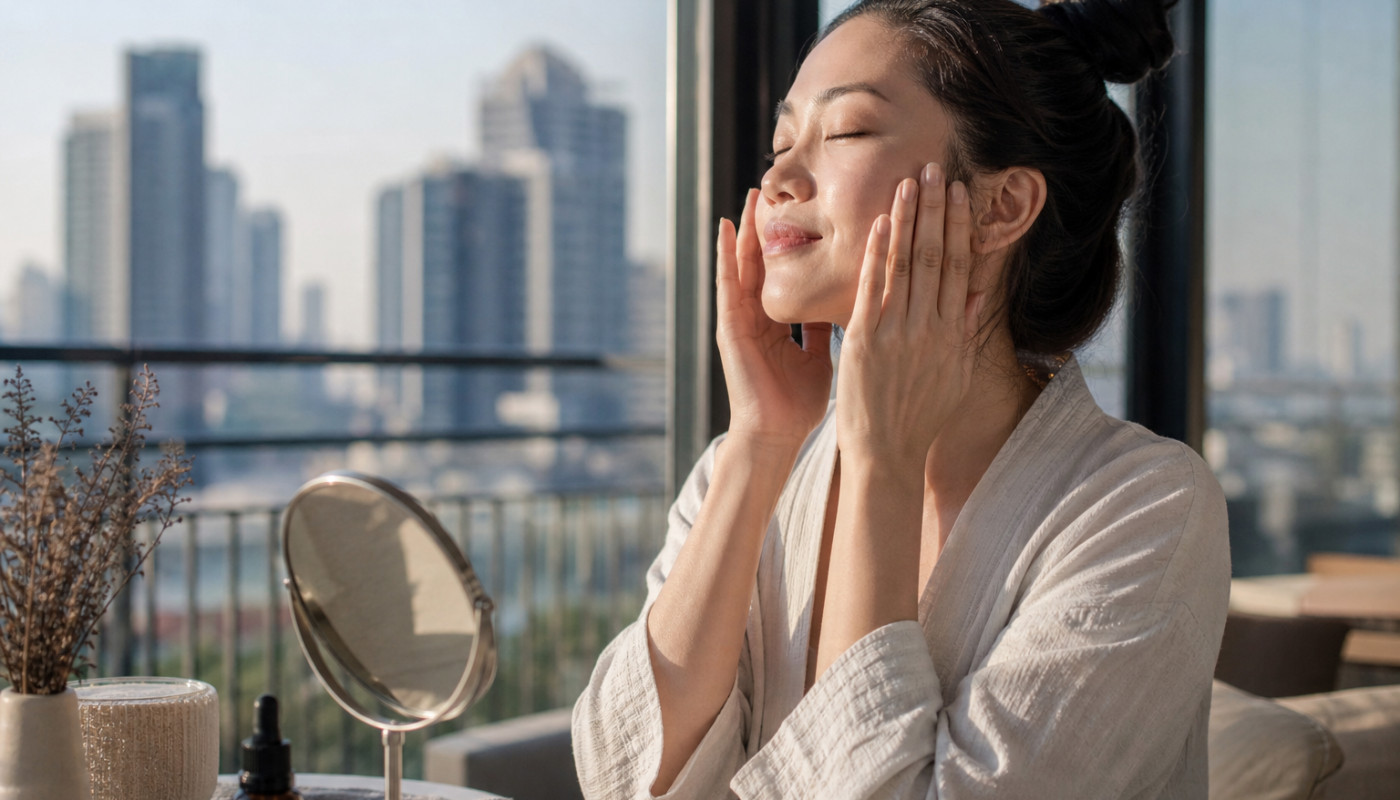
In practice, many people use slip, a basic facial oil, a lightweight serum, or a rich moisturizer, to avoid dragging the skin. The technique usually starts at the center of the face and moves outward, with gentle pressure, especially around the delicate eye area. Jaw tension is often a focal point in cities, where stress and bruxism are common complaints, so massaging the masseter muscle, located near the back of the cheek, is frequently included. Some add tools, gua sha stones, rollers, or vibrating devices, but hands remain the most accessible option, and they offer better feedback, which matters when your skin is reactive or tired.
There is also a quiet behavioral benefit: facial massage can function as a compliance strategy for skincare. People who massage tend to apply products more evenly, take more time with cleansing, and stick to an evening routine rather than collapsing into bed. In other words, the massage itself may not be doing all the work, but it encourages the kind of patient, repeated care that improves skin comfort over weeks. For readers looking to explore structured techniques and variations, a starting point is to go to my site, where different approaches and session styles are laid out in a way that is easier to follow than short-form clips.
Timing matters too. Morning sessions tend to focus on de-puffing and waking up the face, while evening sessions aim at releasing tension and supporting sleep. City schedules often dictate which one is realistic, and realism is the difference between a sustainable habit and a forgotten “hack.” If you are commuting, traveling frequently, or moving between office and home, a two-minute version can still work: a gentle sweep along the cheeks, soft pressure along the jaw, and light tapping around the brow, then stop. Overdoing it, especially when stressed, is a classic mistake, and it can leave skin feeling warm, flushed, and sensitized.
How to avoid irritation and false promises
Because your face is not a gym. That line may sound blunt, but it is the key to doing facial massage safely, particularly in polluted, high-stress urban environments where the skin barrier is already challenged by particulate matter, indoor heating, and frequent cleansing. Hygiene is the first safeguard. Tools should be washed regularly, hands should be clean, and products should be non-comedogenic if you are acne-prone. If you are using a stone or roller, avoid sharing it, and do not store it in a way that collects bathroom bacteria.
Pressure is the second safeguard, and it is where social media often goes wrong. Many viral demonstrations show strong scraping, dramatic pushing, or prolonged tugging at the skin, yet dermatology basics still apply: repeated mechanical stress can irritate, especially if you have eczema, rosacea, or are using strong actives like retinoids and exfoliating acids. A useful rule is that the skin should not look angry afterward, a little warmth can happen, but persistent redness, stinging, or broken capillaries are red flags. For those on prescription acne treatments or post-procedure recovery, professional advice should come first, and facial massage may need to be paused entirely.
Finally, it helps to be clear-eyed about outcomes. Facial massage can improve how you look and feel in the short term, and for many urban workers that is the point: you want to step into a meeting less puffy, or end a day with less tension around the temples. But it will not replace sleep, and it will not outwork alcohol, dehydration, or chronic stress. The most credible approach is to treat it as one component of a broader routine: sunscreen in the morning, gentle cleansing at night, moisturization, and then massage as an optional enhancer rather than a cure-all. In that framing, facial massage becomes what city living demands most, a small, repeatable practice that gives a measurable sense of control, even when the rest of the day does not.
Planning your next session, without overthinking
For a first session, keep it simple: five to ten minutes, two to three times a week, and increase only if your skin stays calm. Budget for a basic facial oil or moisturizer you already tolerate, and if you book a professional treatment, ask about technique, pressure, and contraindications. Some cities also offer wellness reimbursements through employers or insurance add-ons, so check whether massage-oriented facial care is eligible before you pay out of pocket.
Similar

Exploring The Benefits Of Smart Monitoring Devices For Face Masks

The Invisible Shield: Exploring the Science of Hygiene

Decoding the Language of Food: A Deep dive into Nutritional Science

The Forgotten Wisdom: Rediscovering Natural Remedies
